
Natural soapstone is very appealing. It has a soft, almost velvety feel and gentle veining which makes it a popular choice for interior designers. But anyone who has soapstone in their homes knows that it requires a huge amount of work to keep it looking good. Because it is so soft, it scratches easily, and its porosity means that it has to be oiled or waxed in order to stop it discolouring. It is not really suitable for floors as it crumbles and wears quicker than other natural stones.
But there is an alternative which gives the look and feel of natural soapstone but in a more rigorous format which will require less work and stand the test of time. Enter our Porcelain Soapstone. In this blog we will look at both natural and porcelain soapstone and compare and contrast them.
What is natural soapstone and why do designers love it?
Soapstone is a metamorphic rock, rich in talc. It is this talc that gives it the smooth, velvety feel. Designers love it for several reasons:
- A calm, matt surface that feels hugely tactile rather than flashy
- Subtle, sporadic veining that adds movement without being overwhelming
- A timeless, understated look that works in both traditional and modern homes
- Natural heat resistance, which is why it has been used for centuries on worktops and hearths
The qualities that make soapstone feel so lovely underfoot and to touch are also the source of its problems!
What are the issues with real Soapstone?
It scratches and damages easily
Talc is one of the softest minerals found in nature. Depending on its talc content, soapstone can be marked by anything harder that it is: keys, saucepans, grit lodged in the sole of a shoe, or even fingernails. Some people love the look that this gives the stone over time, but many do not.
It needs regular maintenance
If soapstone is not oiled or waxed regularly, it tends to darken unevenly. This is because it is porous and reacts to moisture. To keep the colour consistent, it needs to be treated monthly to begin with to build up a resistance to the external factors that affect how it looks and this is a big commitment of time.
It is not ideal for floors
Because soapstone is so soft, in high traffic areas it can wear, chip or even crumble that’s why more often than not you will see it as a worktop, vanity unit or splashback rather than as a floor tile.
It is heavy and varies from slab to slab
Natural stone will always have more variation in colour than a porcelain tile, as each slab will be different – this can make using it across a big area more challenging when it comes to colour matching and veining. In addition to this, when it is cut as a worktop or similar it will be 2cm thick and so be incredibly heavy. This weight adds to cost on transport and installation.
Why choose porcelain over the real thing?
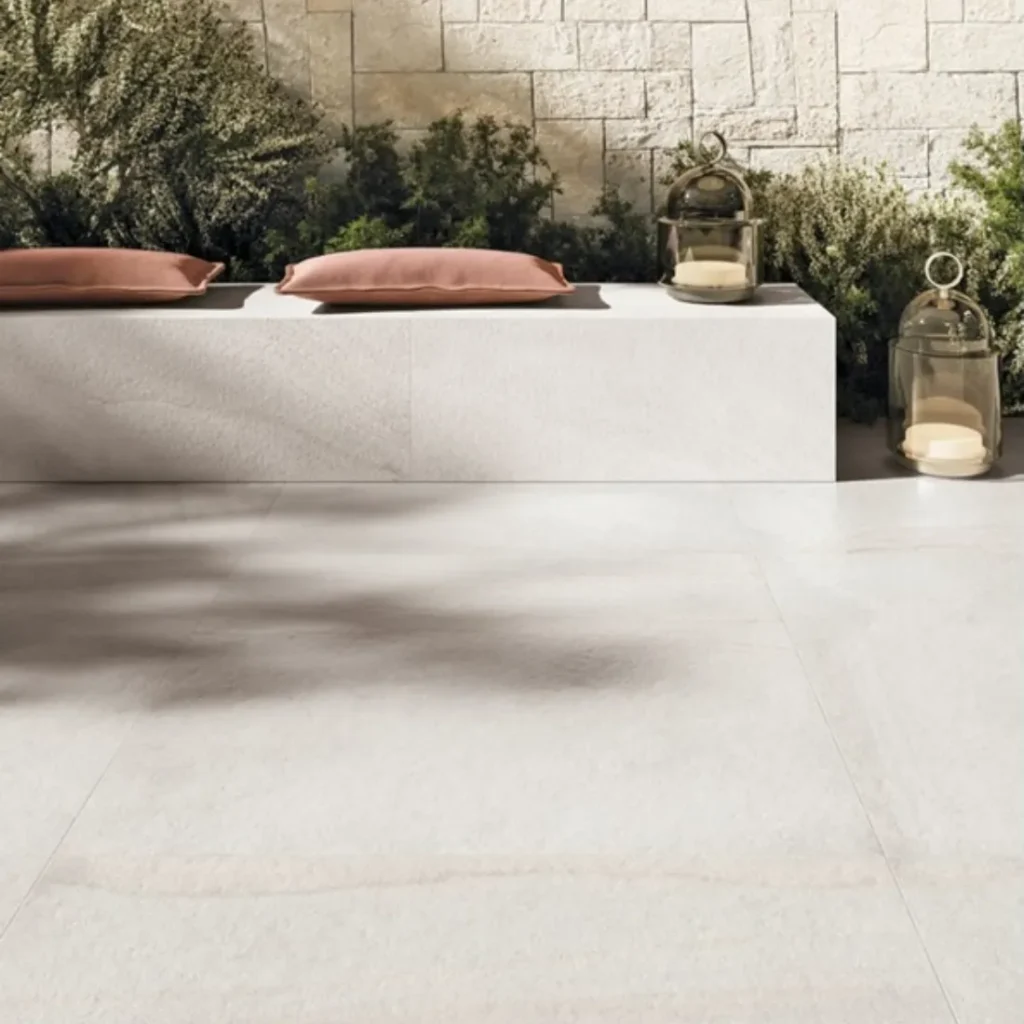
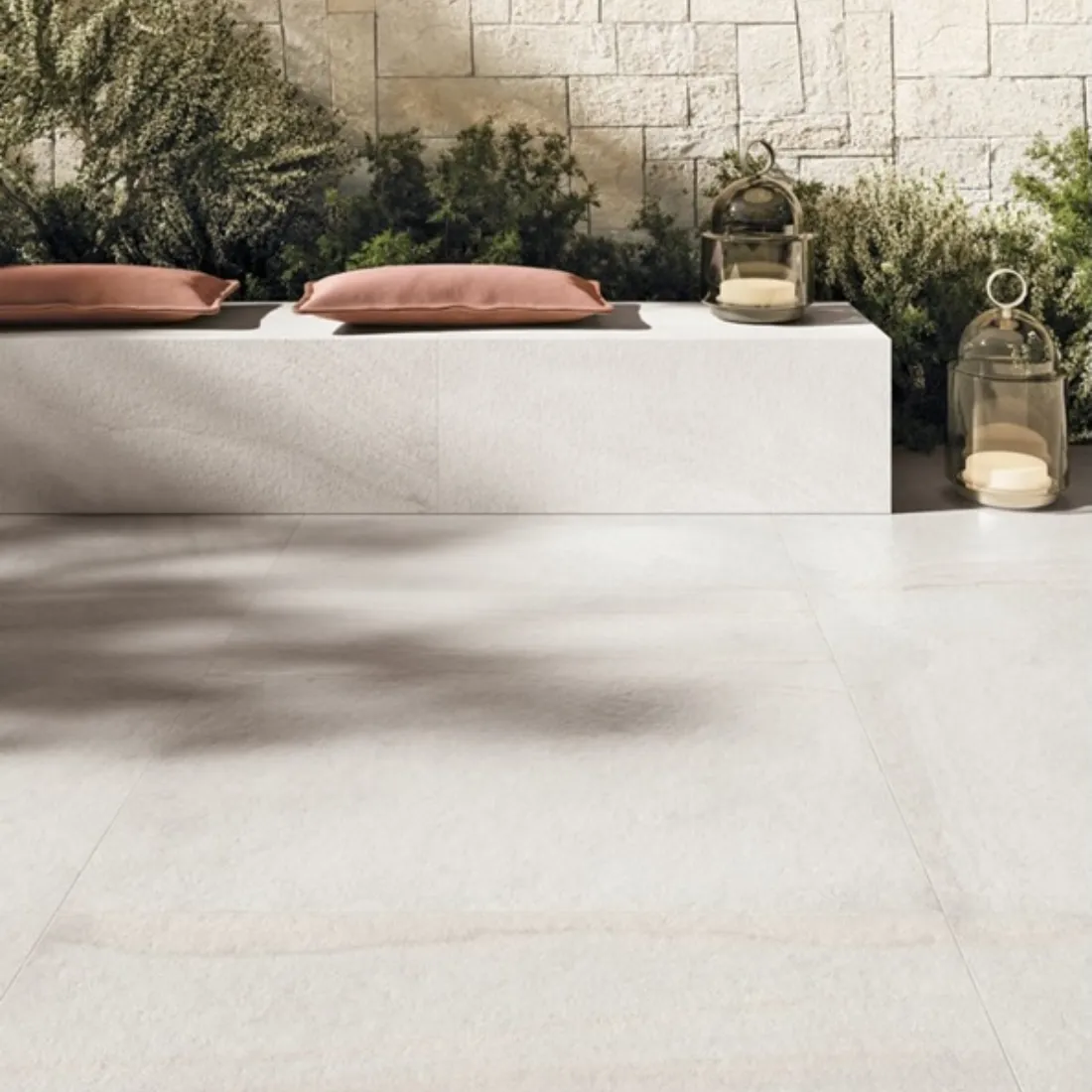
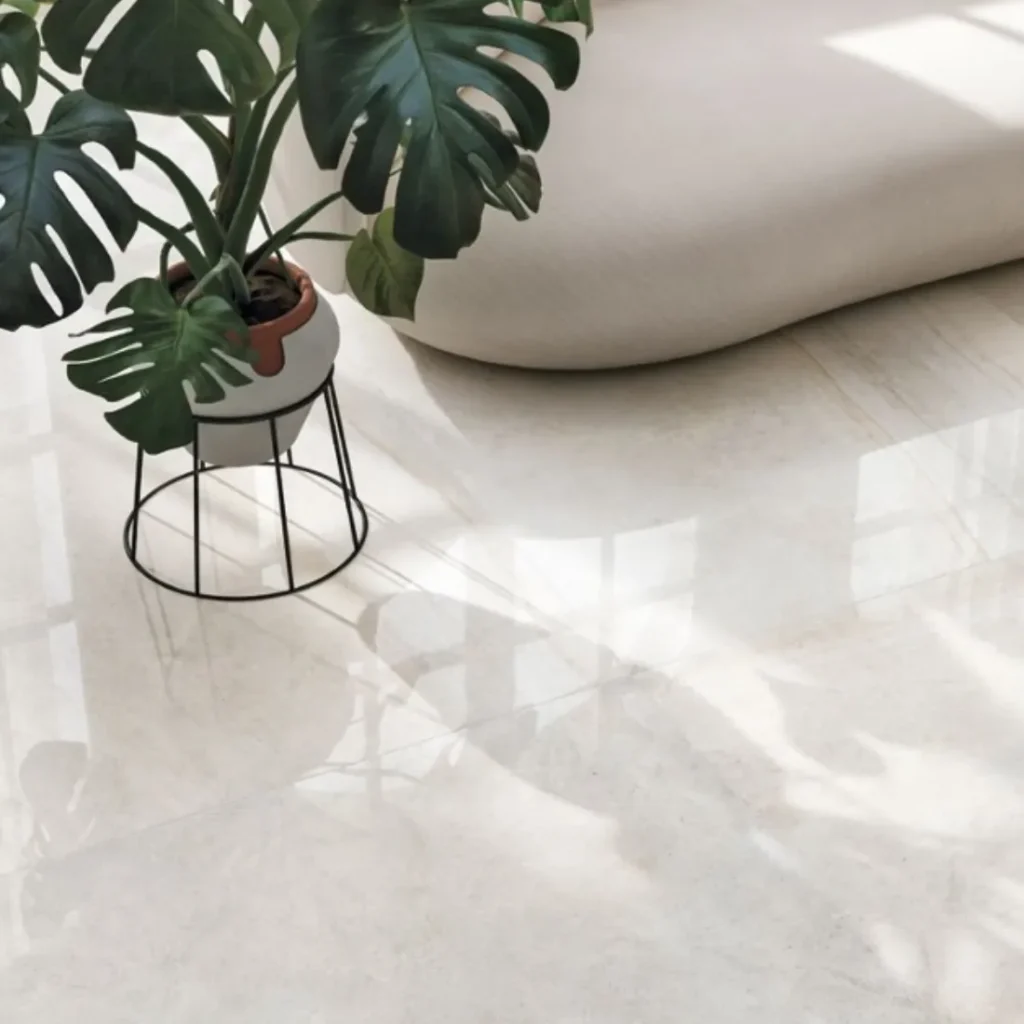
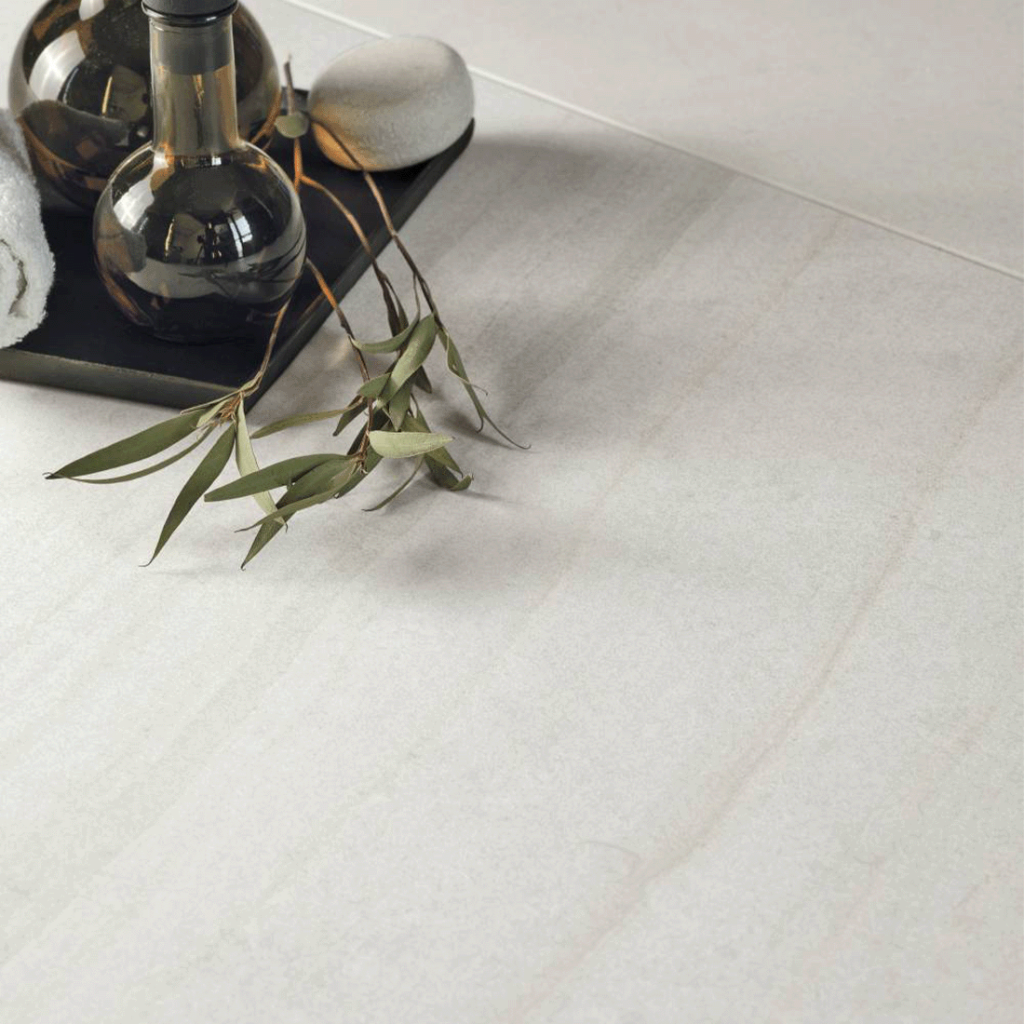
Our Soapstone tile recreates the soft, stone-effect look with the sweeping veins, but in a hard-wearing porcelain tile. For anyone planning an interior this versatility opens up a much wider range of uses.
Far harder and more scratch resistant
Porcelain is fired at a very high temperature – up to 1,400 degrees Centigrade. This means that they are super tough and hard wearing as well as being heat- and scratch-resistant so they can be used in high traffic areas such as hallways and kitchens without the fear that they will get damaged.
No sealing or oiling required
Porcelain tiles are very low maintenance and don’t require sealing or oiling to keep them looking good. A mop and a pH-neutral cleaner are all they need.
Suitable for any surface inside or out
Where natural soapstone has limited uses, porcelain soapstone can be used almost anywhere in your house:
- Kitchens and bathrooms on walls and floors
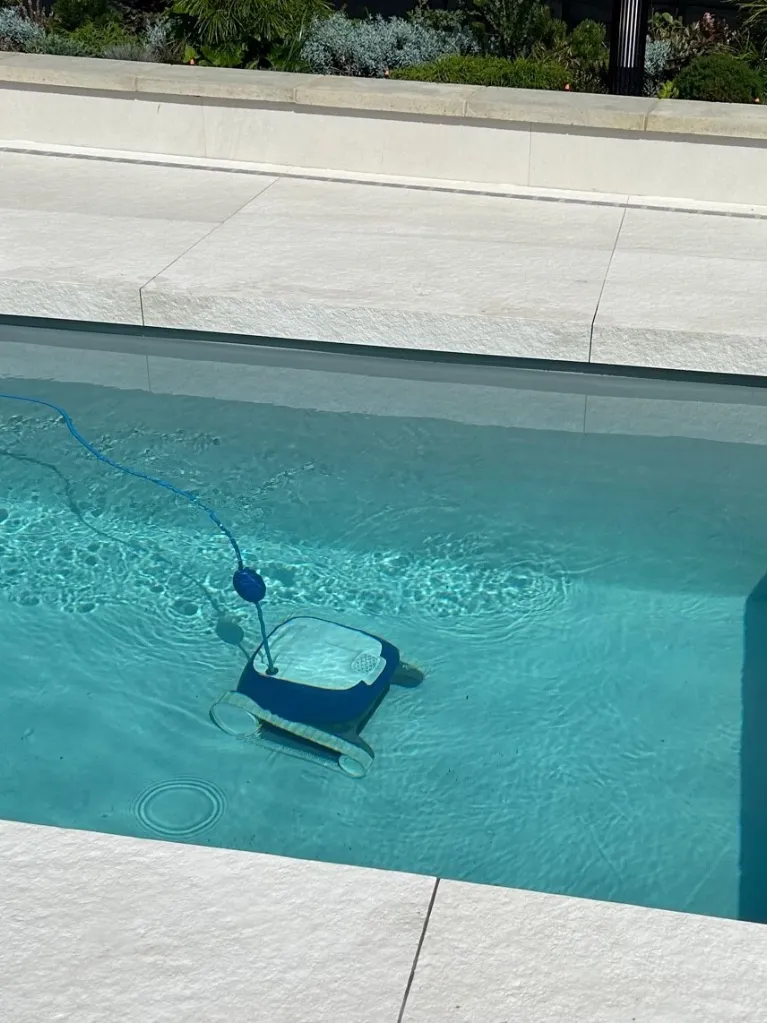
- Wetrooms and pool surrounds using the very anti-slip Structured finish
- Outdoor terraces and paving, with a 2cm ooption suitable for all sub-bases (the 9mm tile has to be laid on cement when outside)
- Seamless inside-out schemes taking the same tile from living space to patio
Anti-slip finishes as standard
Our porcelain Soapstone comes in two finishes, natural and structured. The natural variant keeps the soft natural look and feel whereas the structured version adds texture without losing character.
Consistent colour and large formats
As mentioned earlier, one of the problems with natural soapstone is the variations you get in colour and veining. With the porcelain version, those issues simply don’t exist. You get consistency from tile to tile with light colour variations and soft veining, but there will never be a huge discrepancy. It is also available in a variety of sizes, including large formats that reduce grout lines for a more seamless finish.
Compatible with underfloor heating
More people are moving away from traditional heating options and looking at underfloor heating particularly when laying new stone or tile floors in living areas. Porcelain is a great conductor and retainer of heat making it an ideal surface for underfloor heating.
Porcelain Soapstone vs Natural Soapstone at a Glance
| Feature | Natural Soapstone | Porcelain Soapstone |
| Scratch resistant | Low; marks easily | High |
| Maintenance | Regular oiling or waxing | No sealing; simple cleaning |
| Floors | Limited; can wear or chip | Ideal, indoors and out |
| Wet areas and outdoors | Limited | Yes, with anti-slip and Structured finishes |
| Colour consistency | Cut from natural slabs/blocks | Consistent from box to box |
| Formats | Cut from natural slabs/blocks | 60x60cm, 60x120cm, 120x120cm (9mm); 60x120cm (2cm |
| Underfloor heating | Possible, but heavy | Excellent |
Where does porcelain soapstone work best?
Kitchens
With our porcelain soapstone, it is ideal for use on kitchen floors. Its pale, softly veined surface pairs well with kitchen cabinets painted in muted greens, inky blues and warm neutrals.
Bathrooms and wetrooms
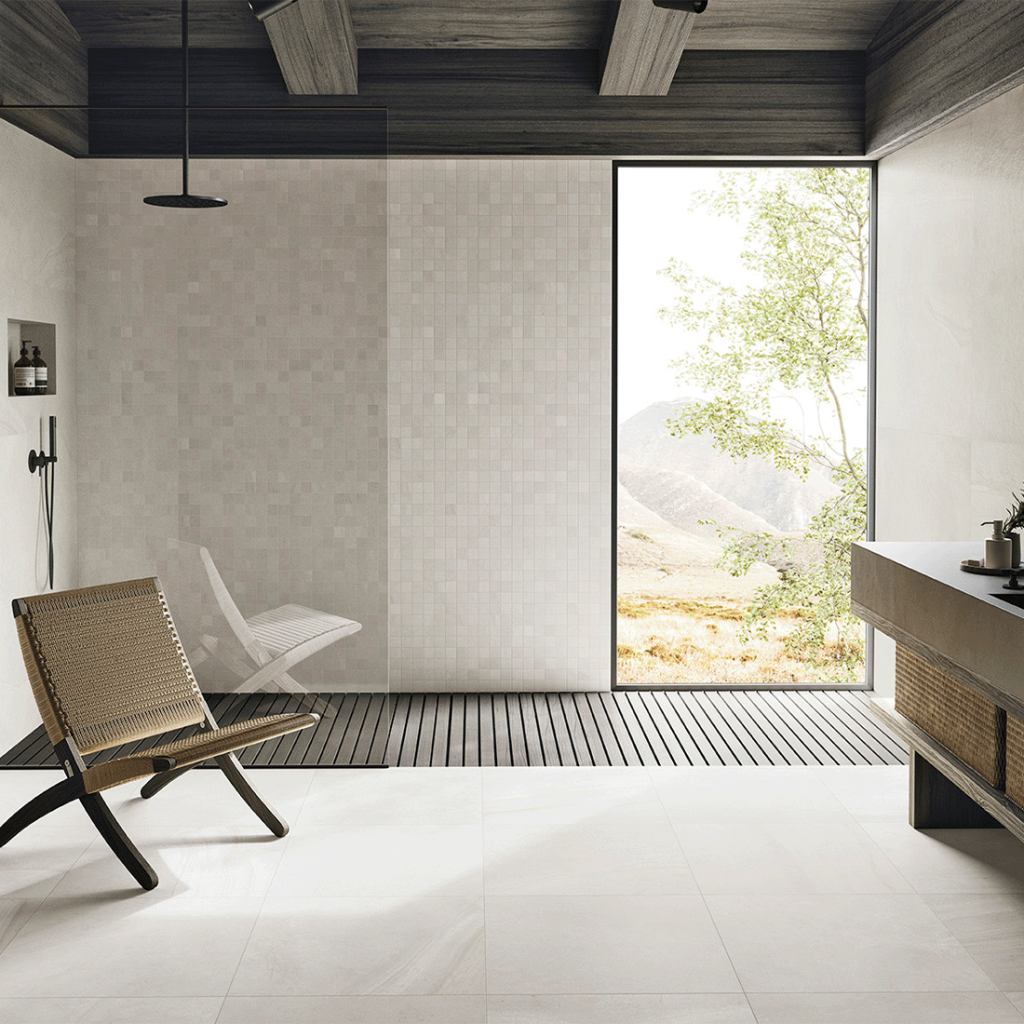
The large 120x120cm format reduces the number of grout lines and can be used to create a stylish and calm look in bathrooms and wetrooms. The structured finish on the floor gives an excellent anti-slip rating and the natural version can be used on the walls.
Open-plan rooms and living spaces
The natural look of our porcelain soapstone with its soft veining works well in large open-plan ares, without it becoming too busy. By using the larger format 120x120cm version grout lines can be kept to a minimum creating a beautiful, stylish look which works well with warm, neutral colours.
Terraces and garden paving
The 2cm structured version works well outside and if you use the same tile inside with the natural finish, you can create a smooth transition from inside to out that carries your kitchen into the garden.
How much does porcelain soapstone cost?
Our porcelain soapstone starts at £59.00 + VAT per square metre for the 60x60cm size. Large formats and a 2cm structured variant are available as a special order. Because it doesn’t need sealing or ongoing maintenance, you can save on costs over the lifetime of the tiles.
See soapstone in person
Photos can only tell you so much about a tile, so when you get to the point of actually buying your tiles it is really important to see them “in the flesh” and more importantly to feel them. The finish and colour are key with these tiles, so visit our showroom at 51-55 Stirling Road, Chiswick, London W3 8DJ or call our sales team on 020 8993 5545 to have a chat about your project. You can also order up to four FREE samples through the website.