What is Tile Drenching?
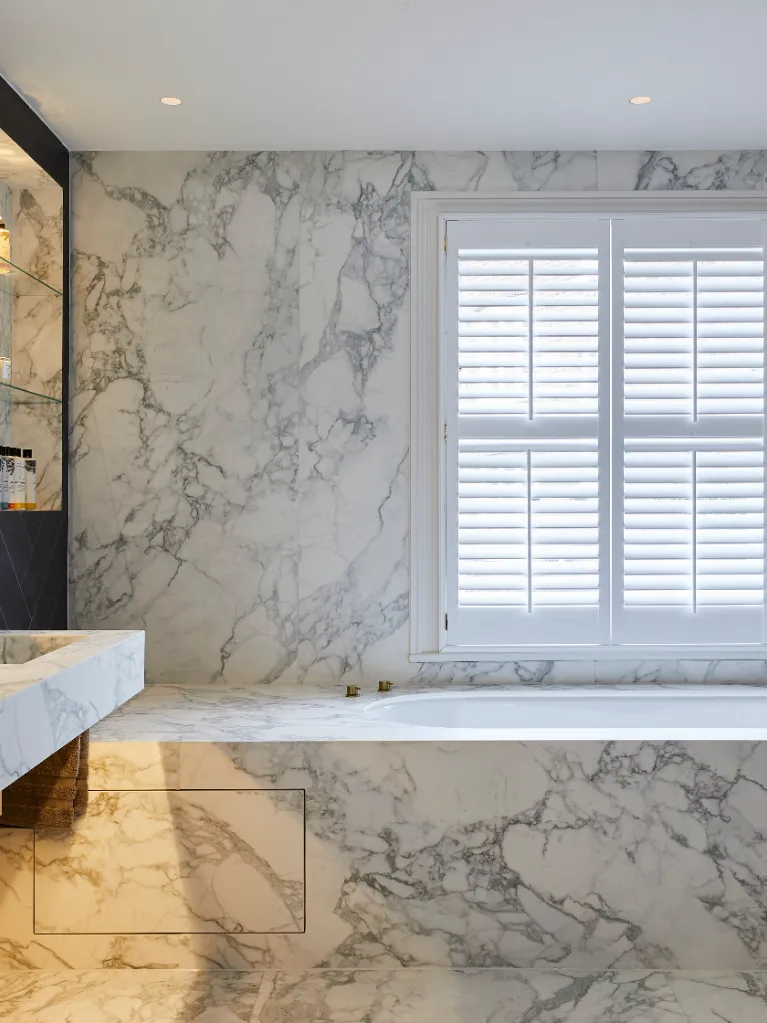
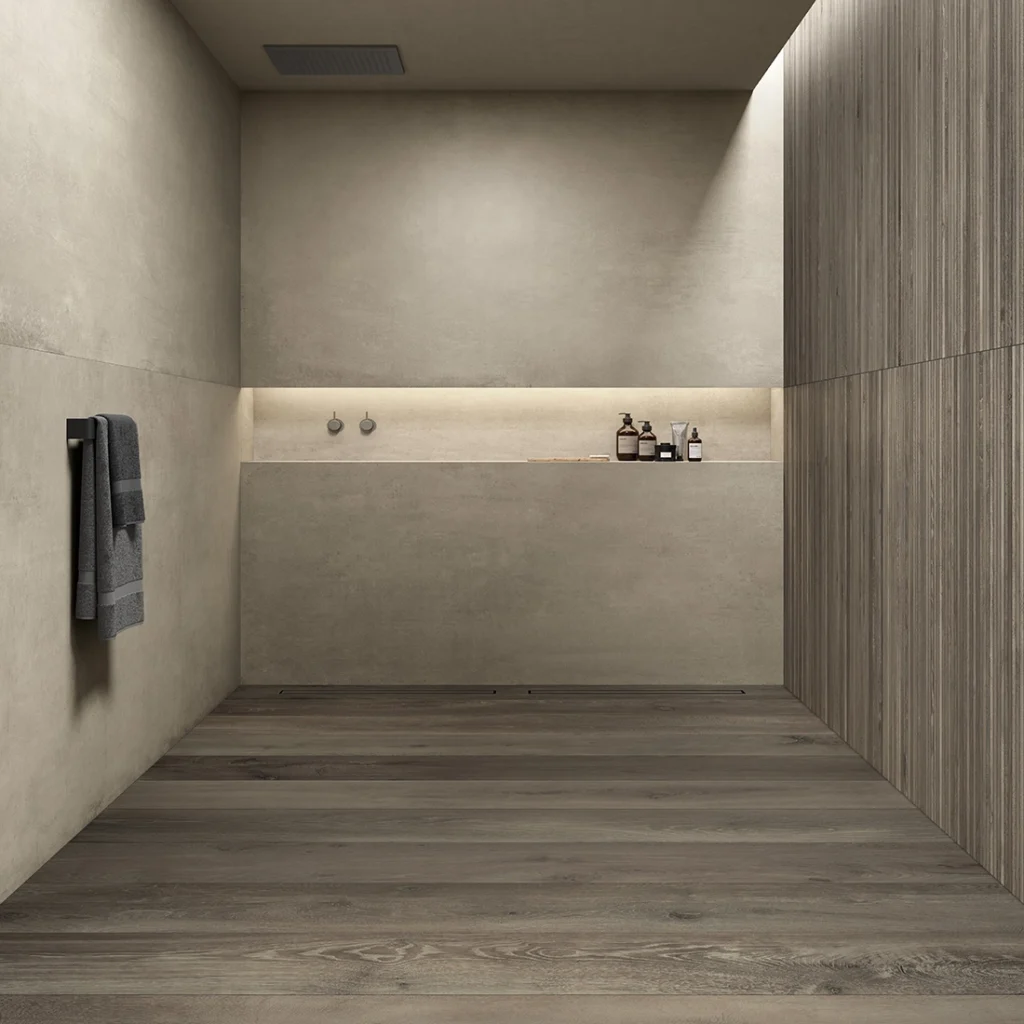
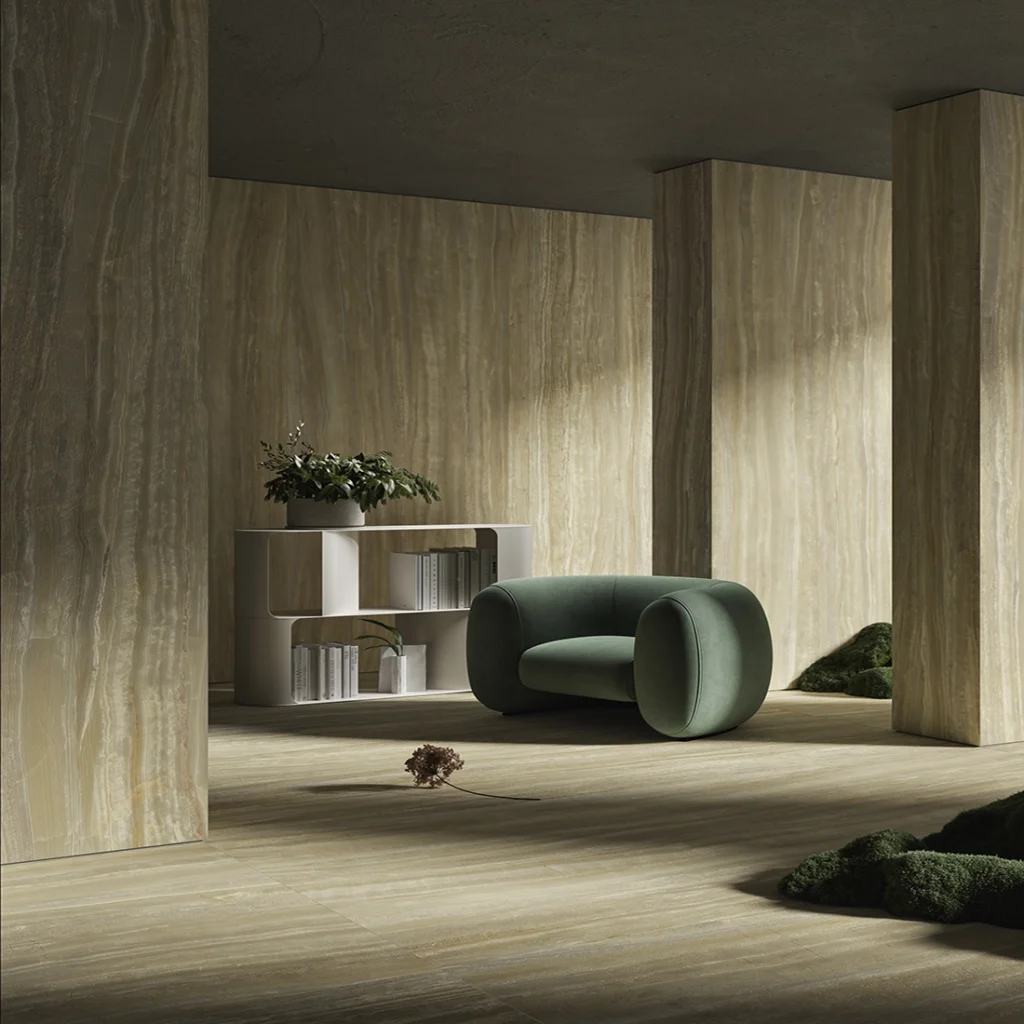
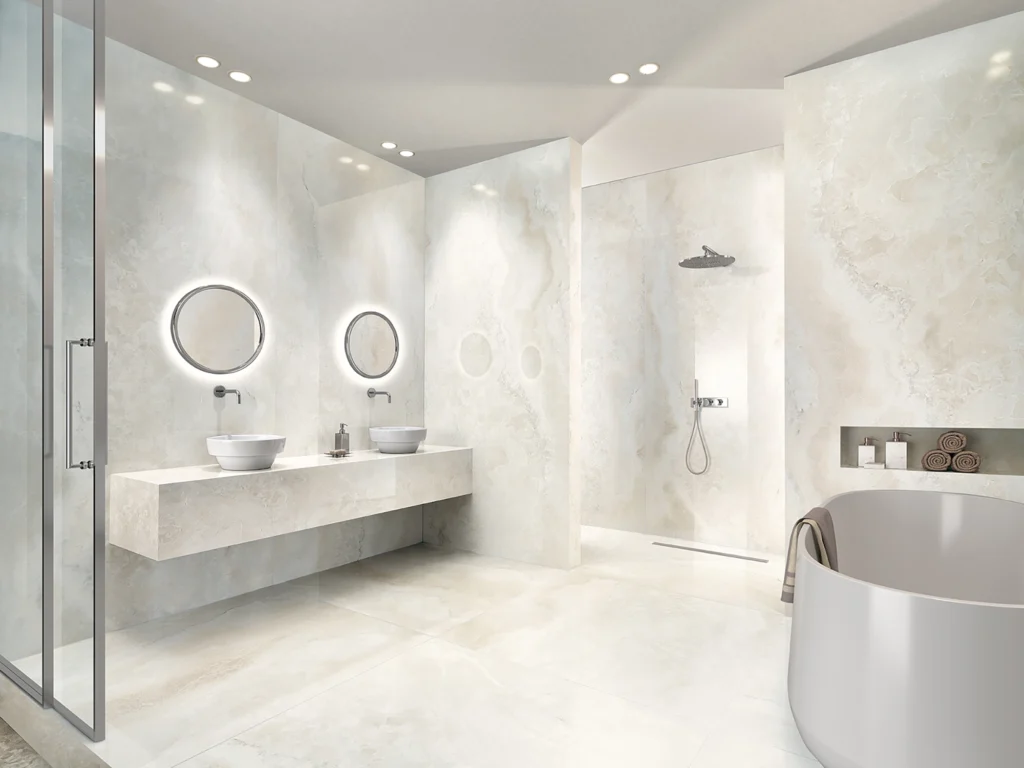
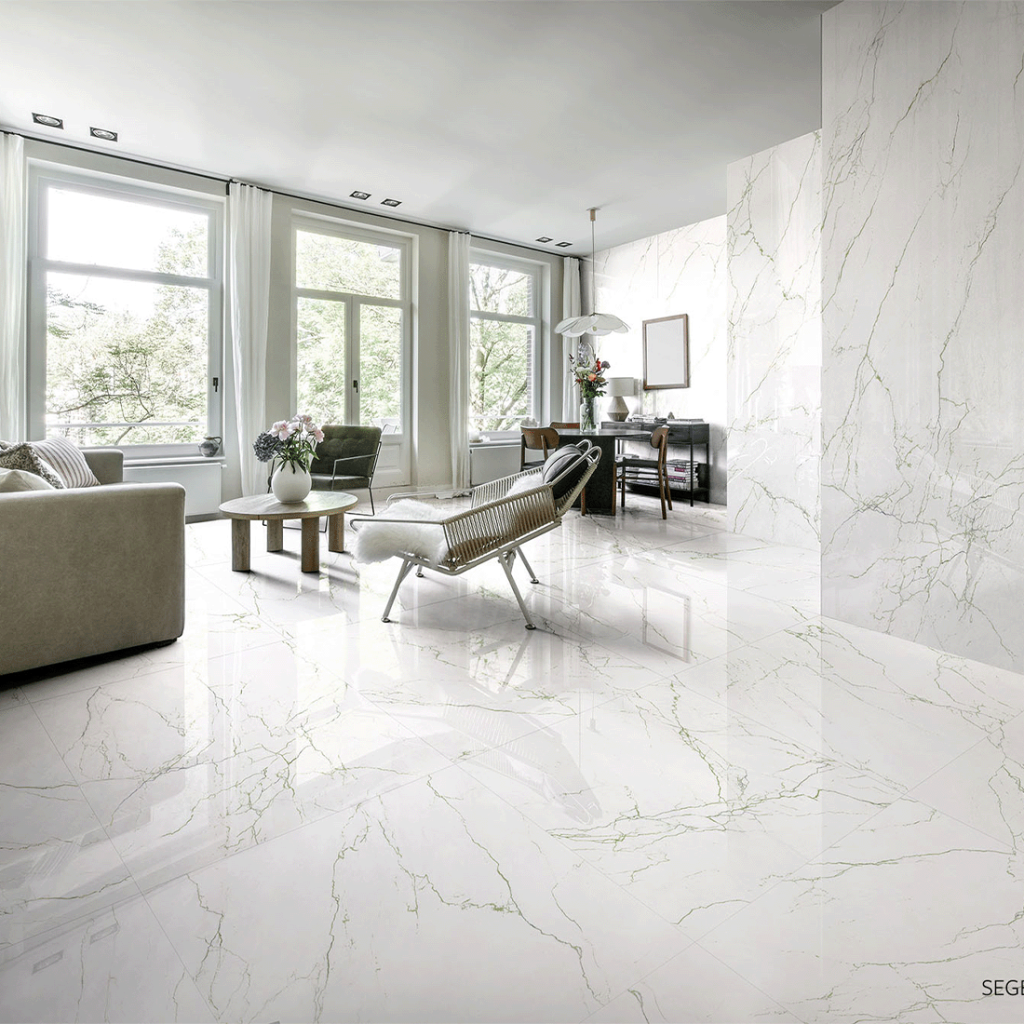
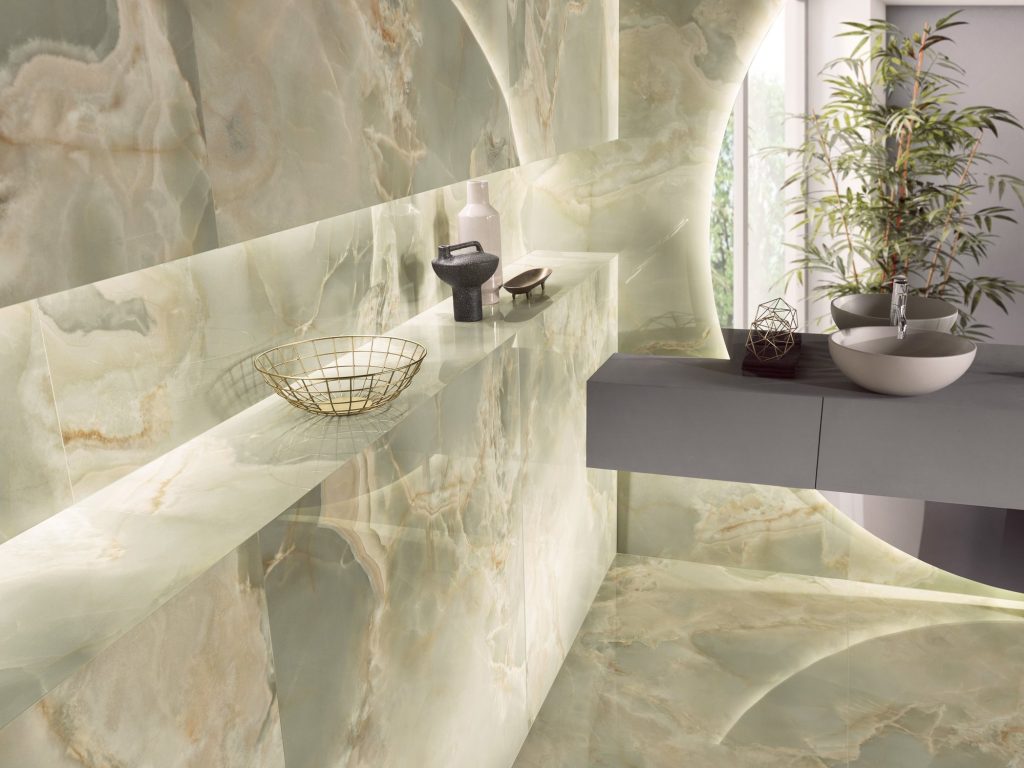
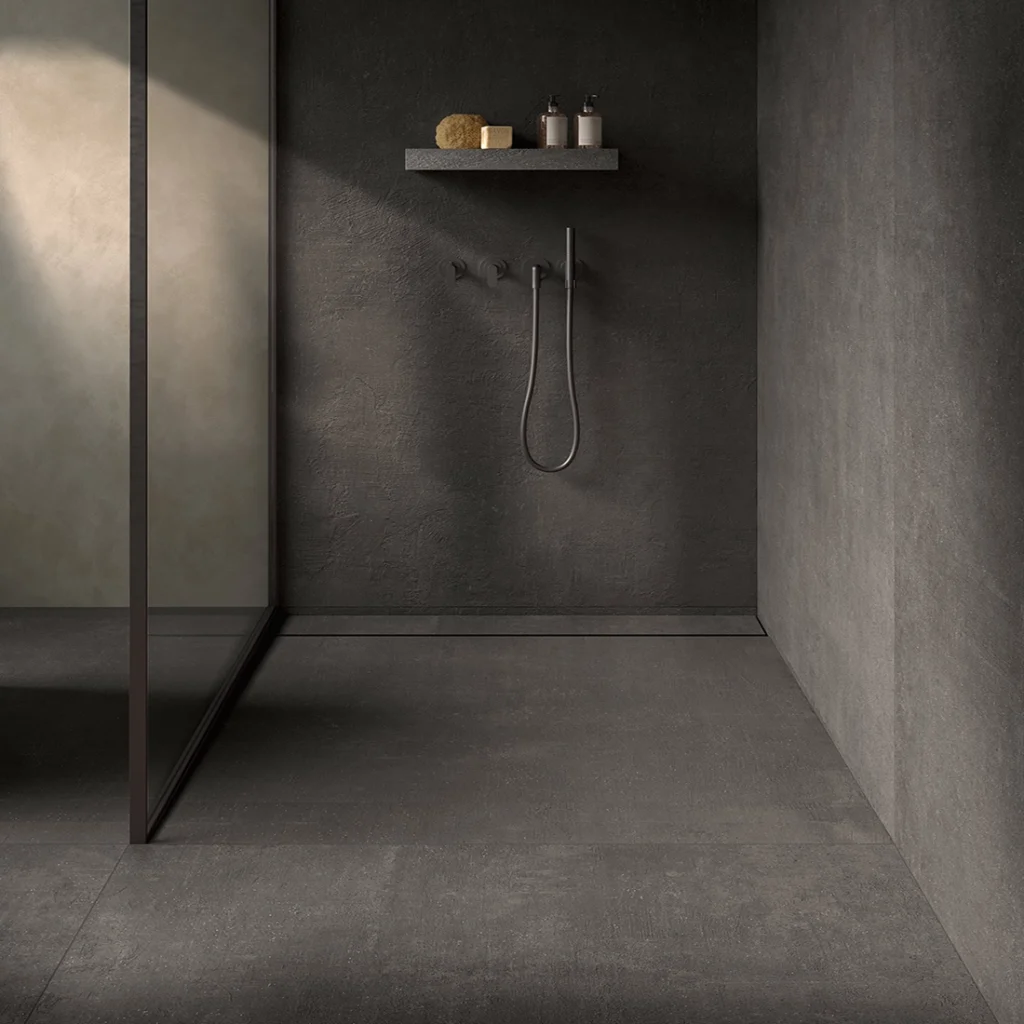
Tile drenching is an interior design trend where the same tile, or closely matched tiles, is used across multiple surfaces within a room — including walls, floors, niches, splashbacks and other architectural features. The result is a seamless finish that can make a space feel more luxurious and architectural.
It might also sound like overkill, but tile drenching can be incredibly effective and look spectacular.
The trend has become increasingly popular as people look to recreate some of the interiors they see in luxury hotels, spas and clubs. Using one tile across several surfaces can create a minimal feel, with less colour ‘clutter’ and a beautifully simplified finish. We’ve spoken previously about warm minimalism and other interior design trends, but in this blog we’re going to look at where tile drenching works best, which tiles are most suitable and how you can achieve the look in your own home.
Why Are Designers Embracing Tile Drenching?
One of the main attractions of tile drenching is the way it makes a room feel: curated and carefully planned.
Rather than introducing lots of different materials, colours and patterns, using one tile across several surfaces creates continuity. This can work particularly well in open-plan spaces and can even help awkwardly shaped rooms feel more pulled together.
Does Tile Drenching Make a Room Look Bigger?
Using one tile across a room can create a seamless appearance. Choosing large-format tiles can enhance this effect further because there are fewer grout lines interrupting the walls and floors.
This can be particularly effective in smaller bathrooms and other small spaces, where reducing anything which feels like clutter can make the room feel more spacious.
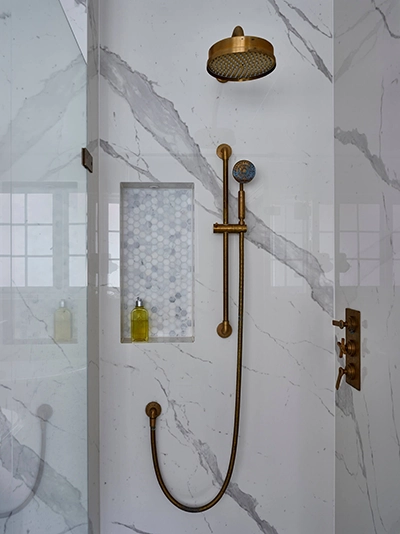
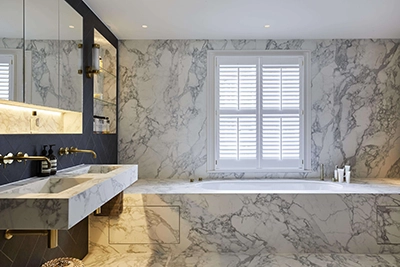
For example, one of our marble-effect porcelain tiles is available in a huge 162cm x 324cm slab, making it suitable for both walls and floors. The polished version can be used on walls, while the matt finish is particularly suitable for floors.
The tile is also available in a 2cm version, which can be used for kitchen worktops and bathroom vanity units. Because it has a bright white background with grey veining, you can introduce colour elsewhere through paint, cabinetry, furniture and accessories without competing with the tile.
How does Tile Drenching create a luxury look?
When we stay in a beautiful hotel or visit an impressive home, it is human nature to notice the ideas we like and store them away for the future.
Tile drenching is one way to recreate some of those high-end interiors at home without necessarily making major structural changes.
The key is choosing the right tile and using it thoughtfully across the space. A tile expert can help you understand which materials, formats and finishes will work best for your particular room.
The result doesn’t have to look like anyone else’s home either. By changing the colour, format, finish, grout and surrounding materials, the same design principle can create a completely individual interior.
How to choose tiles for Tile Drenching
The tile is obviously the key element when planning a tile-drenched room, so there are several things to consider before making your choice.
Ask yourself what you want to be the main feature:
- Colour
- Texture
- Veining
- Finish
- Format
- Or a combination of these
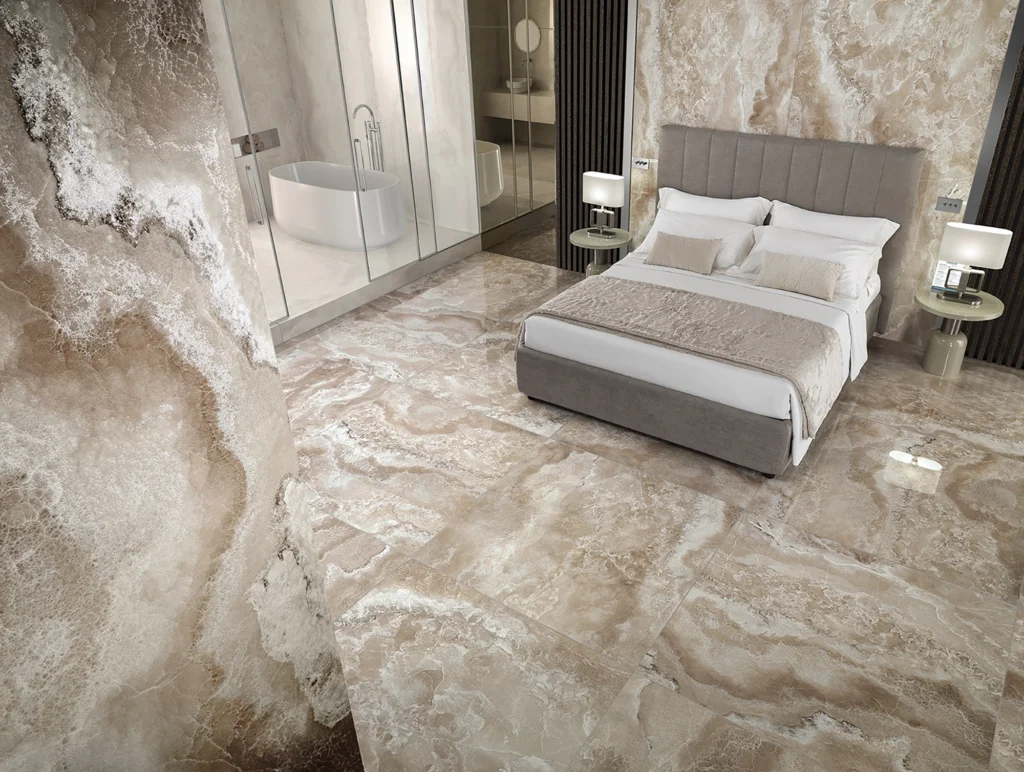
If the tile is going to appear across walls, floors and other surfaces, it is particularly important to consider how it will look under different lighting conditions and from different angles.
Where does Tile Drenching work best?
Tile drenching can work in almost any room of your home, although bathrooms and kitchens are the most obvious applications because these are traditionally the spaces where tiles are used most often.
Tile Drenching in Bathrooms
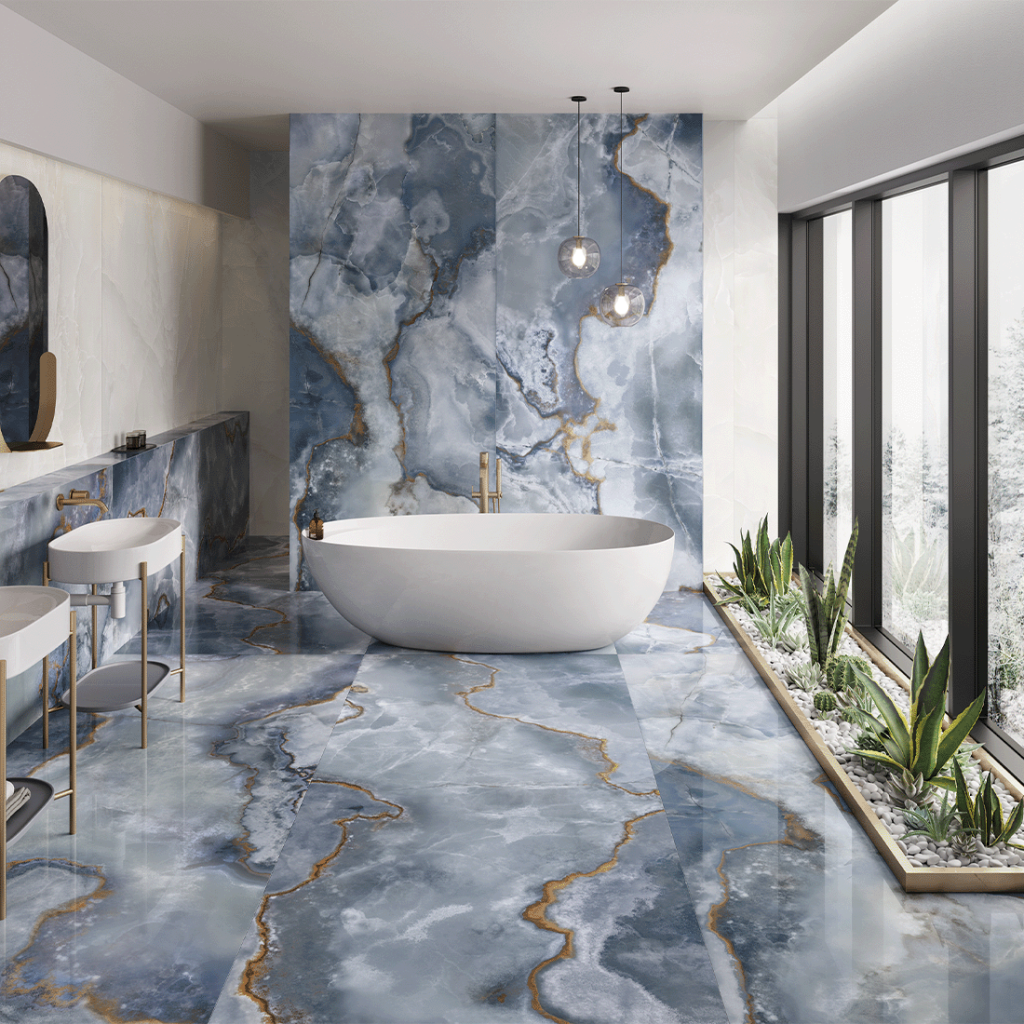
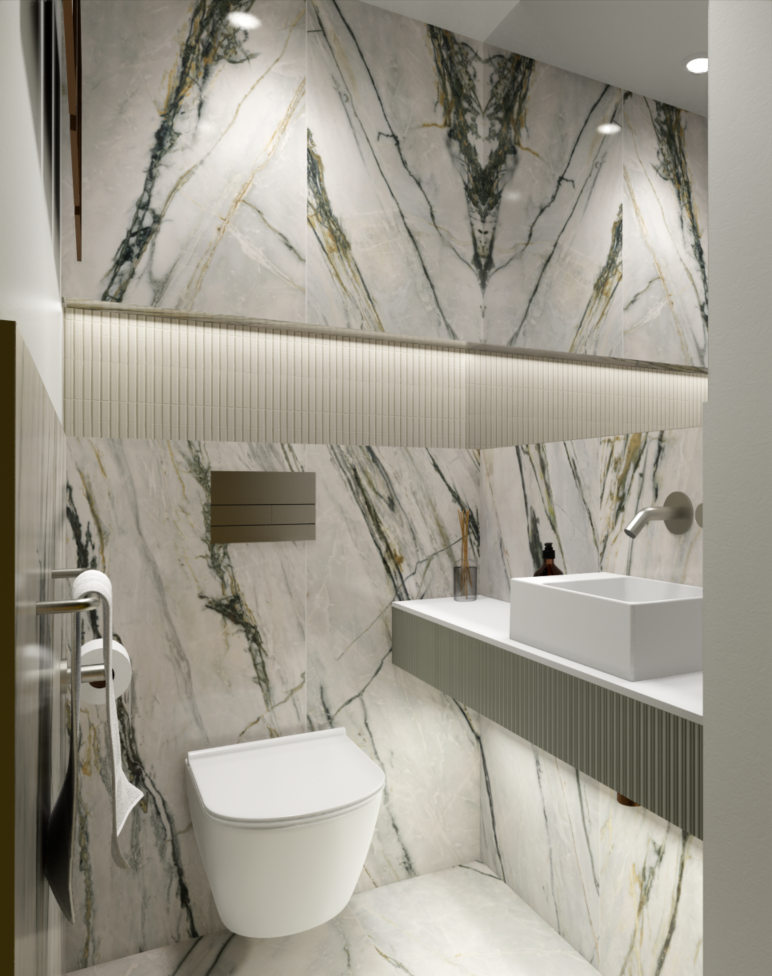
Bathrooms are particularly well suited to tile drenching because the same tile can flow naturally between walls, floors and shower areas.
Ideas include:
- Full-height tiles across walls and floors
- Walk-in showers
- Wet rooms
- Vanity units
- Splashbacks
- Shower niches
- Cladding on furniture
Large-format porcelain slabs can be particularly effective in bathrooms because they minimise grout lines and can create a luxurious, almost continuous surface.
Tile Drenching in Kitchens
Kitchens offer plenty of opportunities to extend the same tile across different surfaces.
Consider using tiles for:
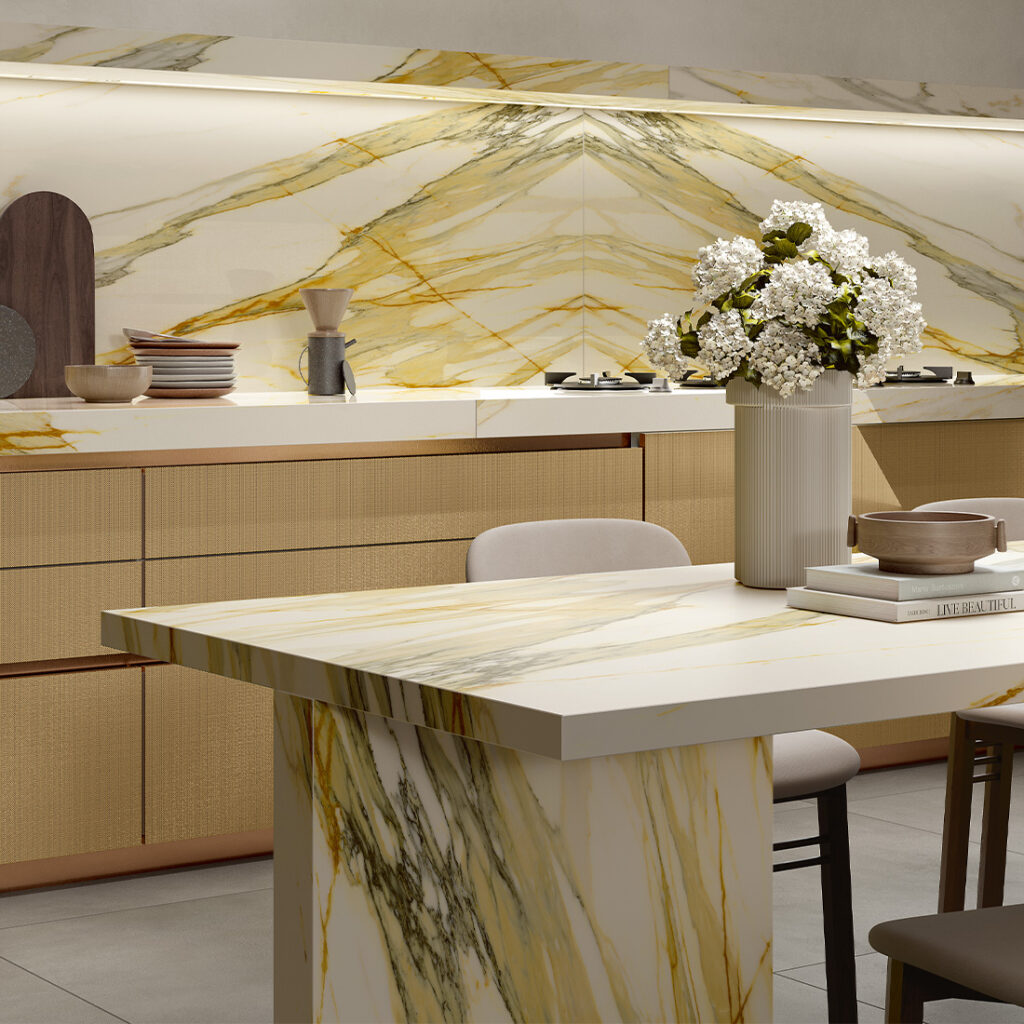
- Splashbacks that flow seamlessly into worktops
- Feature walls
- Floors
- Kitchen islands
- Breakfast bars
- Other architectural features
Using the same material for a splashback and worktop can create a particularly sophisticated effect.
Tile Drenching in Living Areas
Tile drenching isn’t restricted to kitchens and bathrooms.
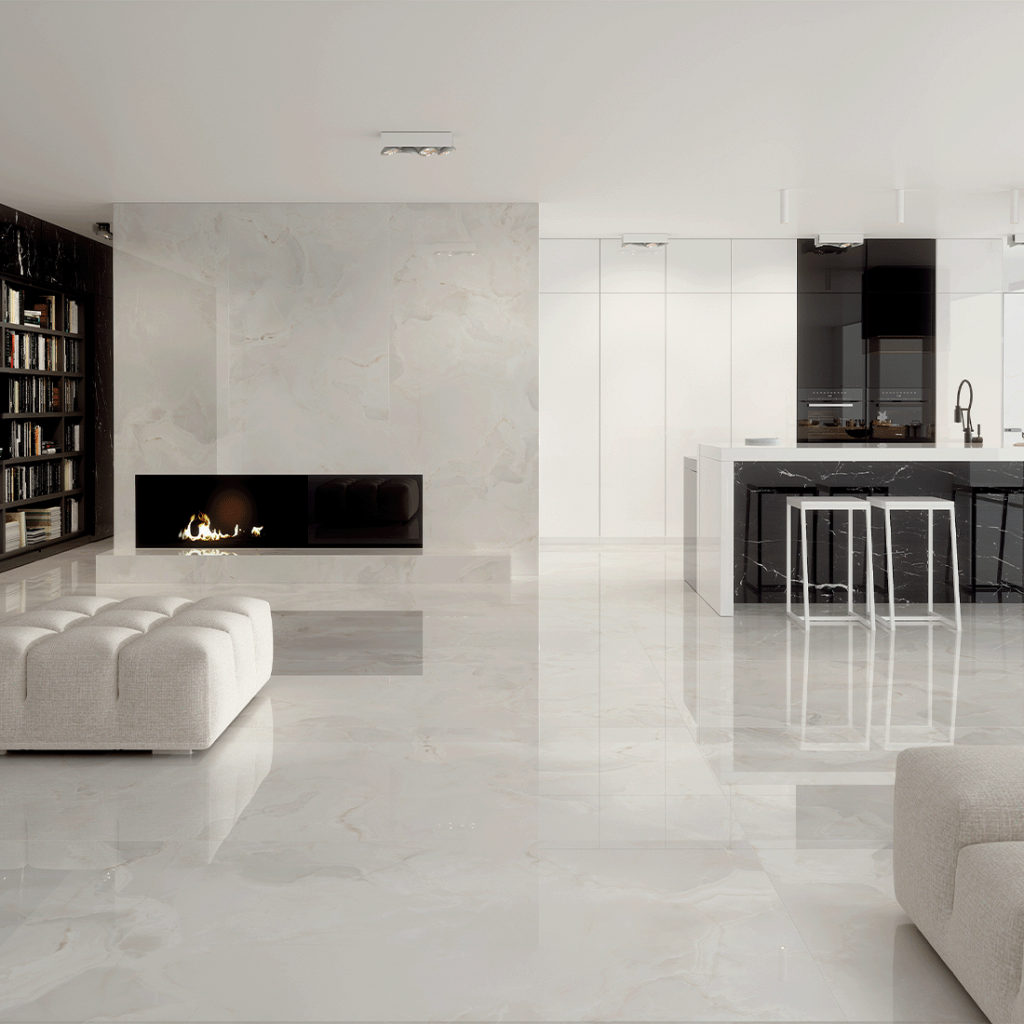
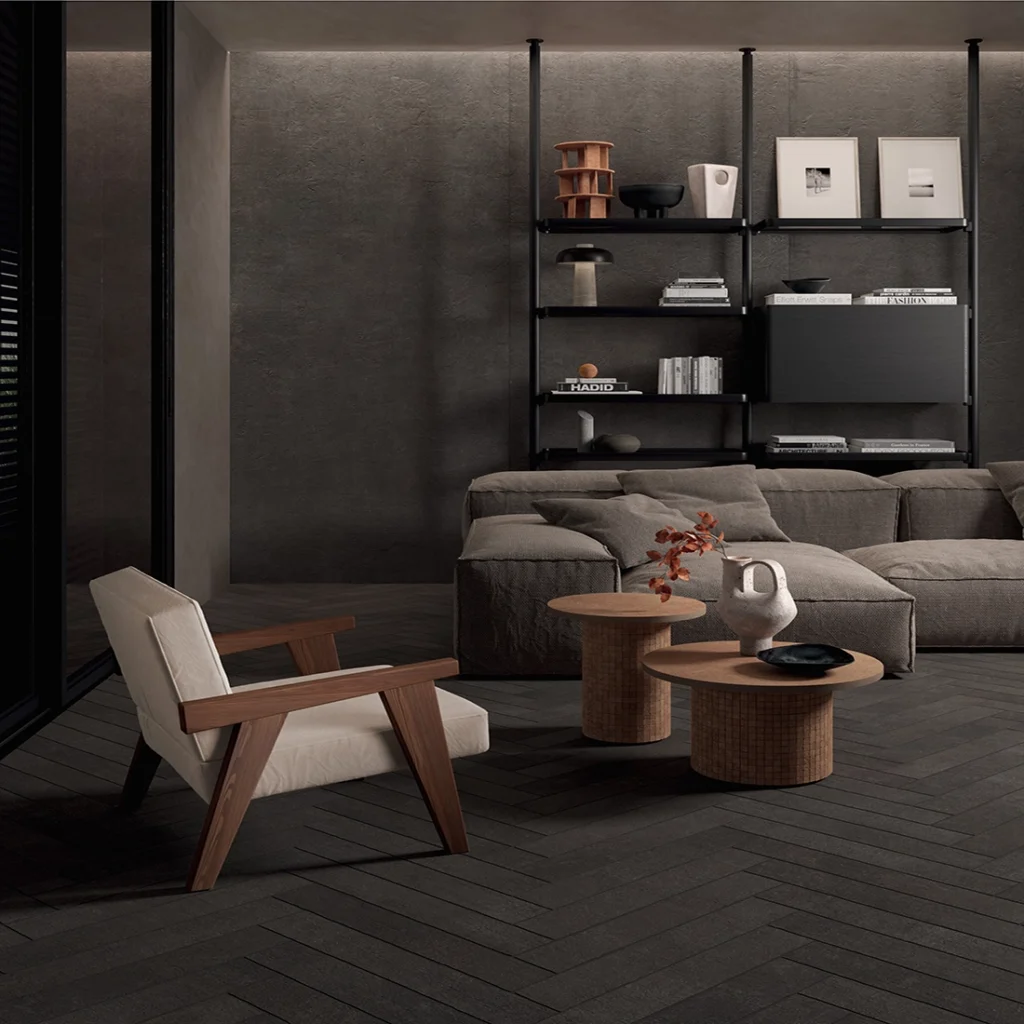
As open-plan living becomes increasingly popular, and rooms are designed to serve multiple purposes, tiles can be used in living areas to great creative effect.
For example:
- Fireplaces and hearths
- Home bars
- Feature walls
- Hallways
- Open-plan kitchen and living spaces
A tiled fireplace or bar can become a strong architectural feature, particularly when the same tile is used across adjoining surfaces.
Tile Drenching and Outdoor Spaces
Tiles can obviously be used outside as well as inside, and it is becoming increasingly popular to use the same or complementary tile inside and out.
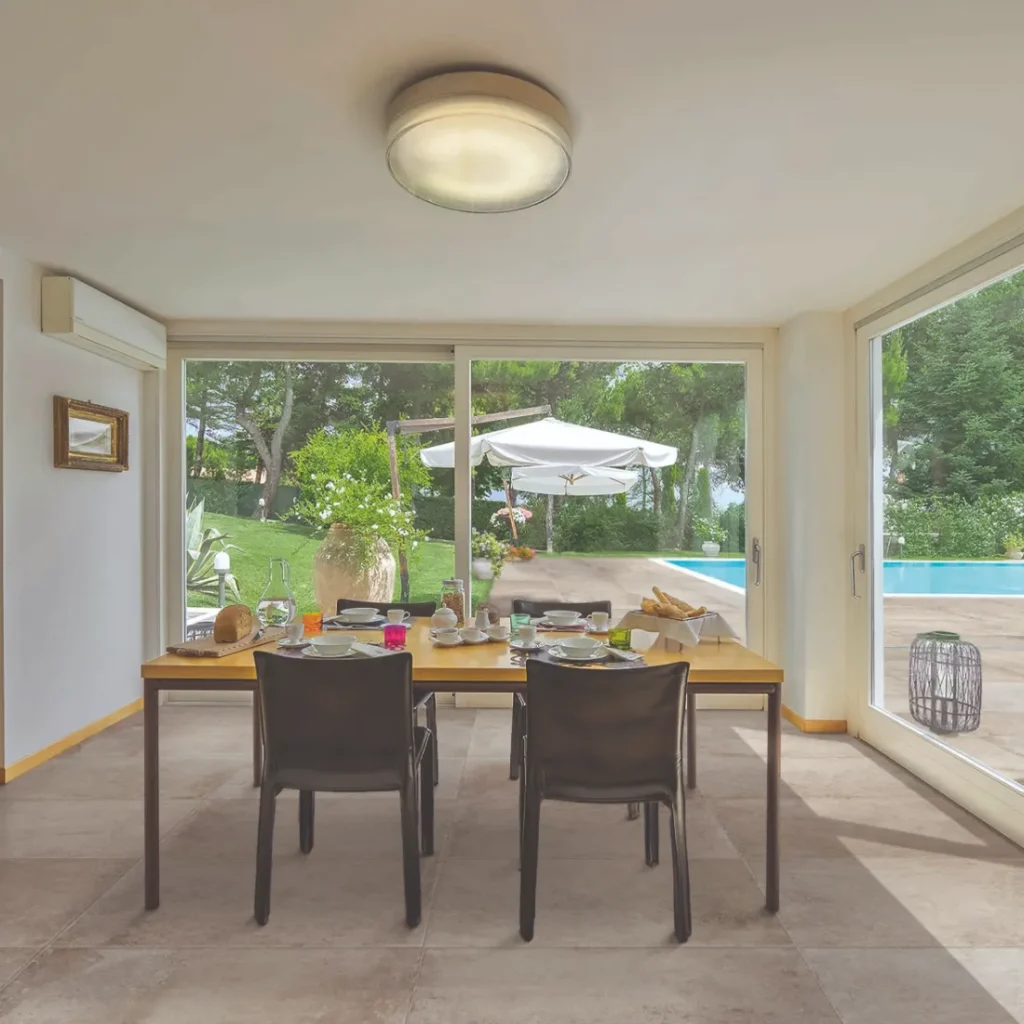
This is another way of using the principles of tile drenching. Continuing the same surface from an interior space into a garden or terrace can help create continuity and make the transition between inside and outside feel much less defined.
This can work particularly well with open-plan kitchens where large doors open directly onto an outdoor entertaining area.
Which Tiles Are Best for Tile Drenching?
Large-Format Porcelain Tiles
Large-format porcelain tiles are particularly well suited to tile drenching because:
- They create fewer grout lines
- They give a more seamless appearance
- They are durable and low maintenance
- They can be used across a range of applications
- Large slabs can be used for worktops and other surfaces as well as walls and floors
The fewer interruptions you have between surfaces, the more convincing the overall effect can be.
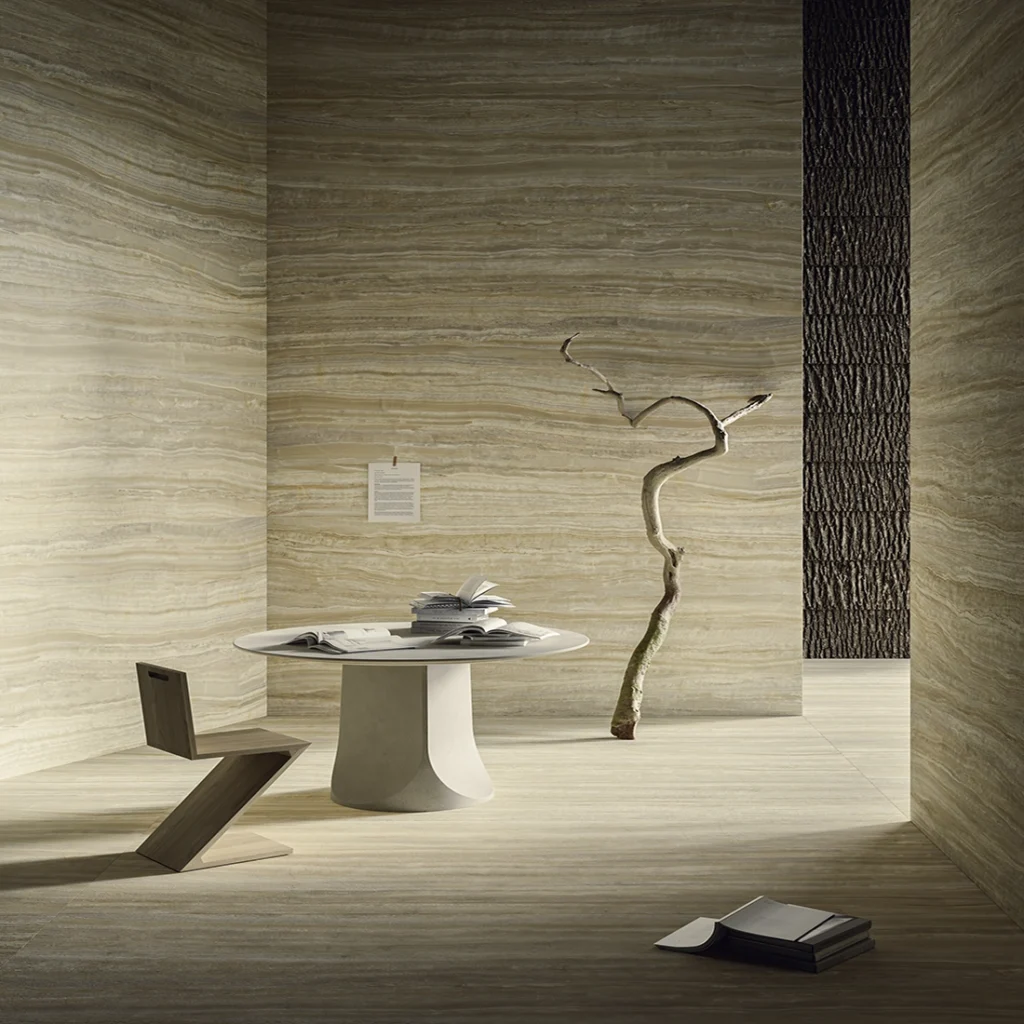
Stone-Effect Porcelain Tiles
Modern porcelain tiles can replicate natural stone incredibly convincingly while offering the practical benefits of porcelain.
Some of the most popular stone-effect options for tile drenching include:
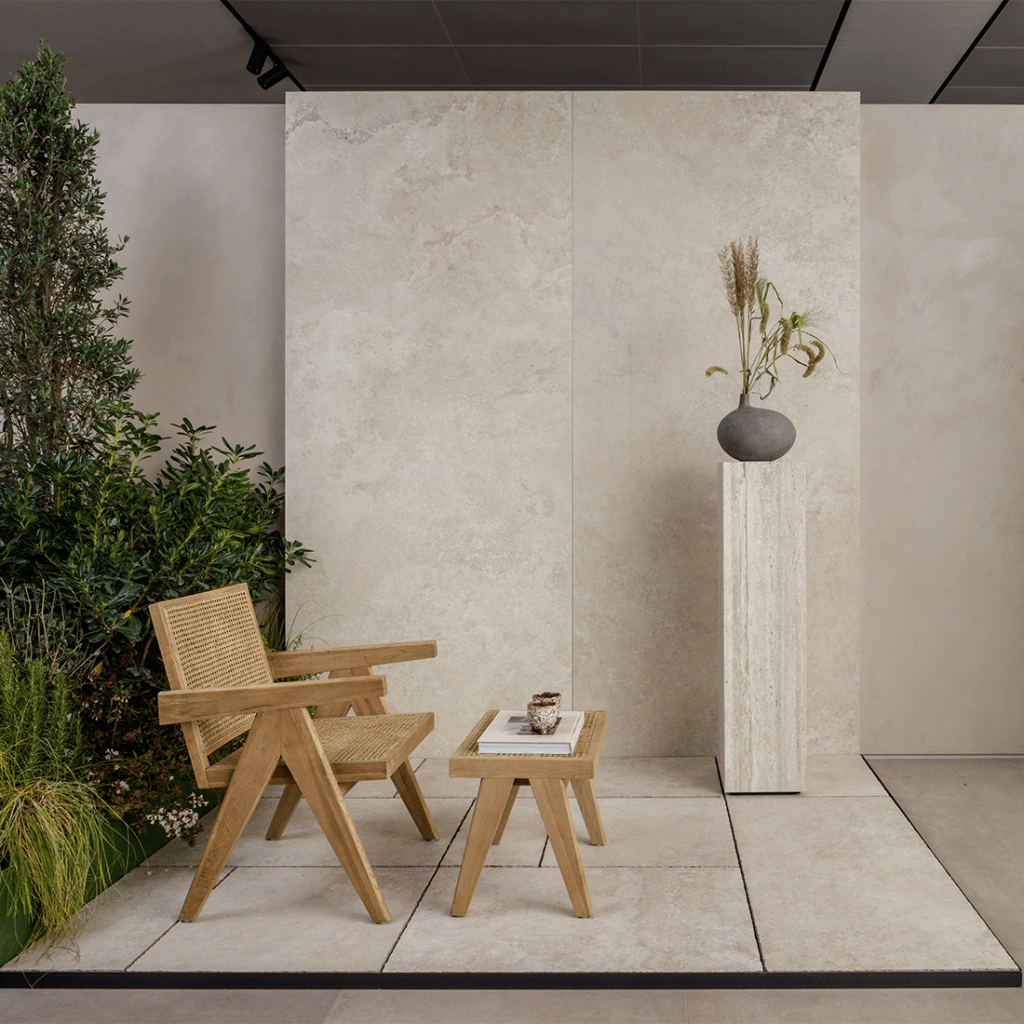
- Travertine-effect tiles
- Limestone-effect tiles
- Marble-effect tiles
Stone-effect porcelain is particularly useful when you want the luxurious appearance of natural stone but need a practical, hard-wearing material for everyday use.
Textured Tiles
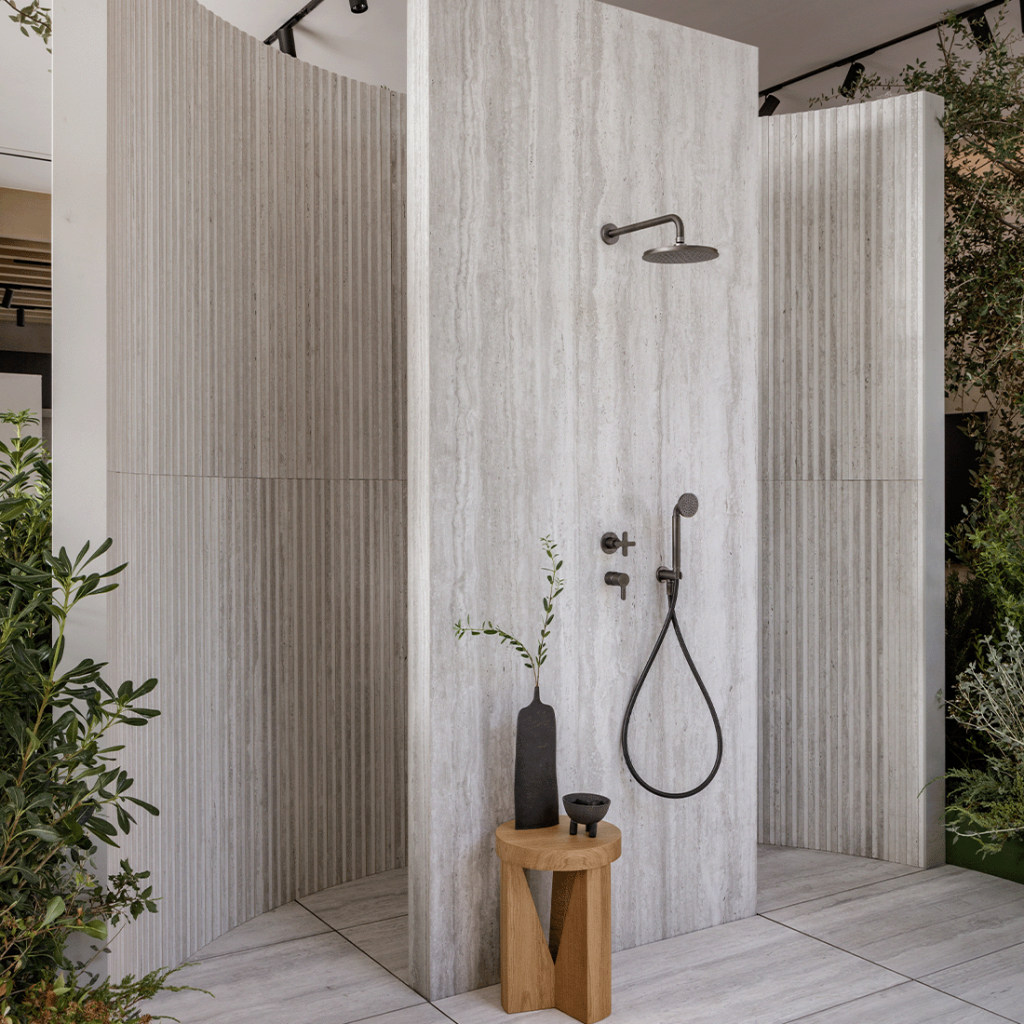
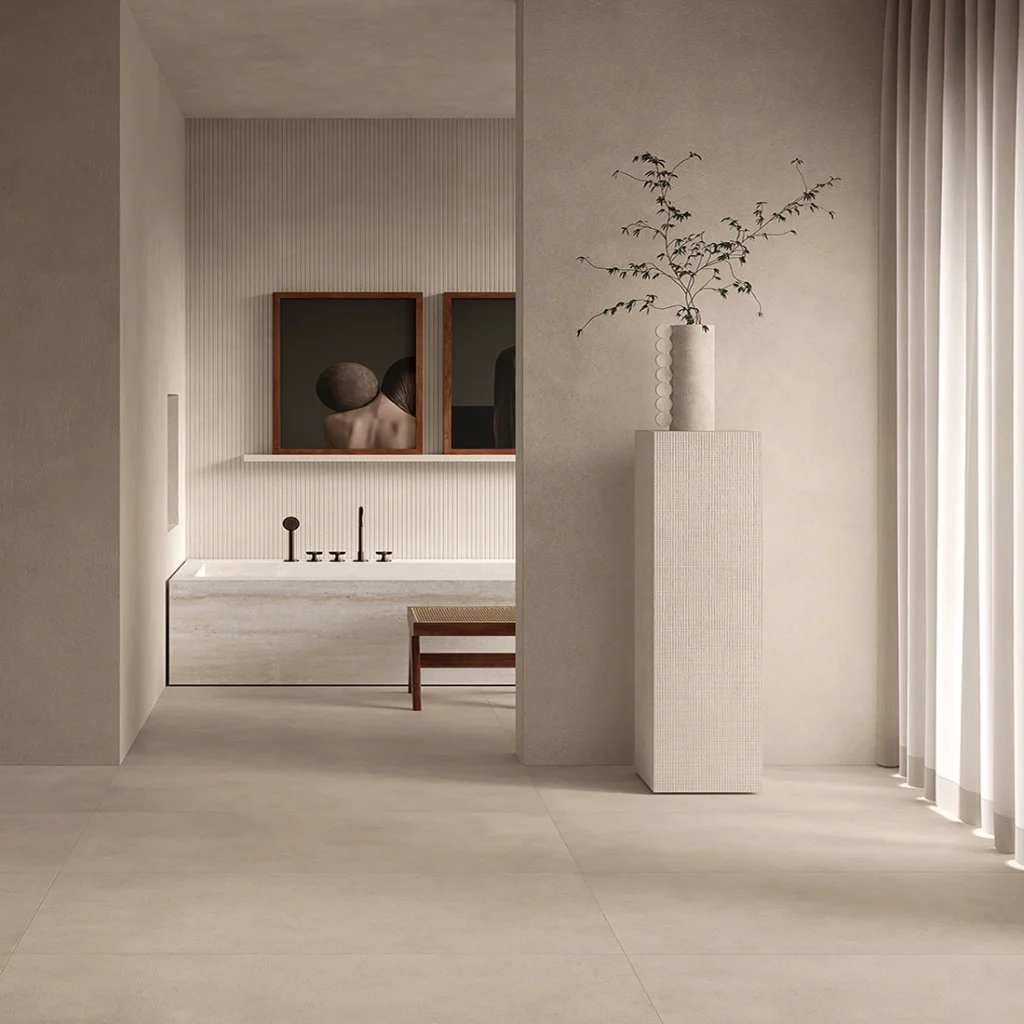
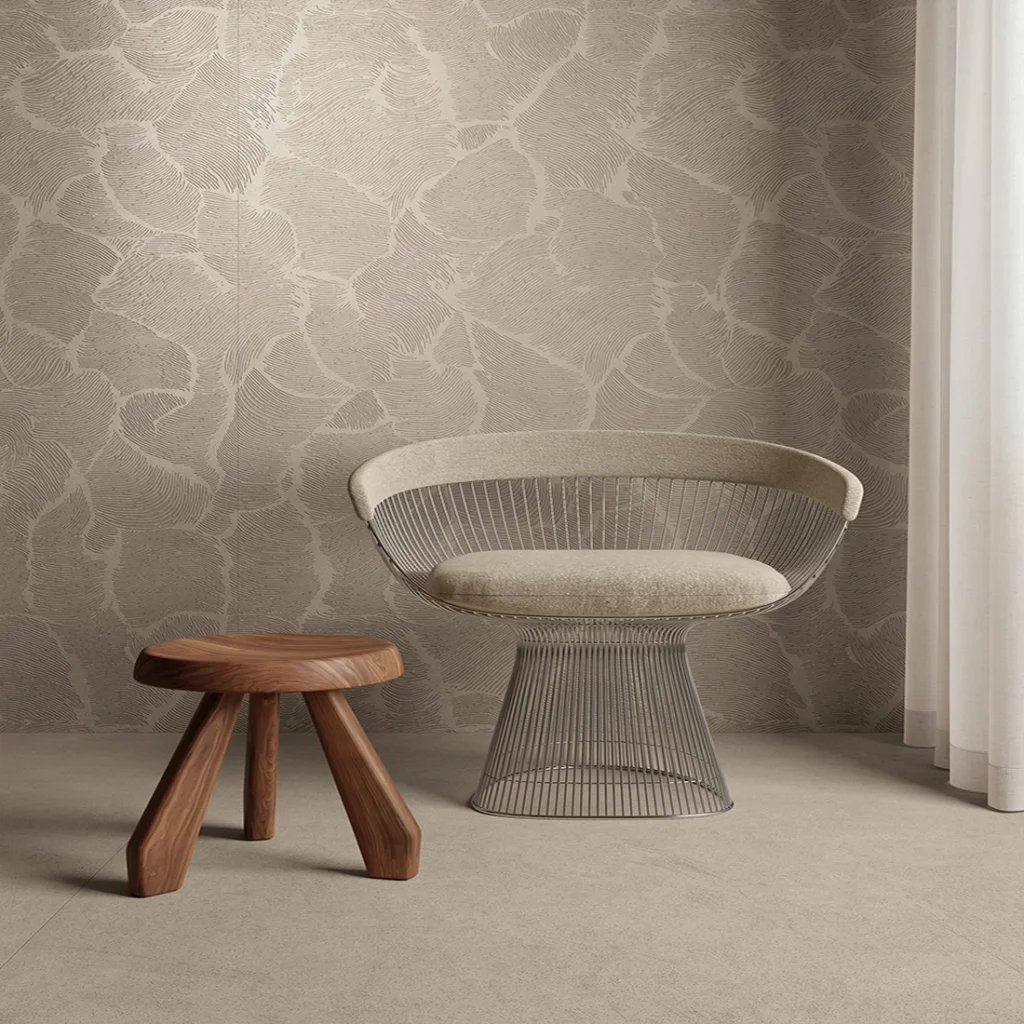
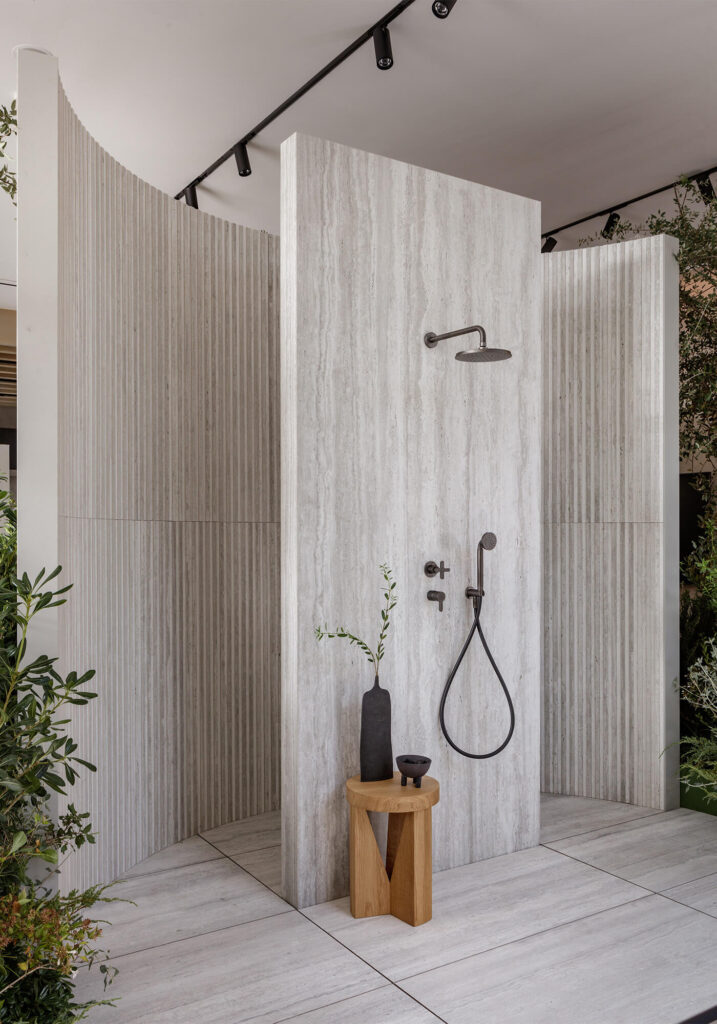
Tile drenching doesn’t necessarily mean using a completely flat surface everywhere. Texture can add depth and interest while keeping the overall colour palette.
Options include:
- Fluted tiles
- 3D strip mosaics
- Tactile matt finishes
- Zellige-effect tiles
The important thing is to consider how much texture and movement the room can handle.
Keep Patterns and Movement Under Control
When considering tile drenching, choose tiles with moderate movement and variation.
Essentially, keep it simple. A highly patterned or heavily veined tile can be beautiful when used as a feature, but if that same pattern appears on every surface it can become overwhelming.
If you want the tile itself to be the star, allow it room to breathe by keeping other elements restrained.
Tile Drenching Colour Trends
Colour is one of the easiest ways to personalise a tile-drenched room.
Current palettes that work particularly well with the trend include:
- Warm beige
- Mushroom
- Clay
- Olive
- Soft taupe
- Sand
- Mocha
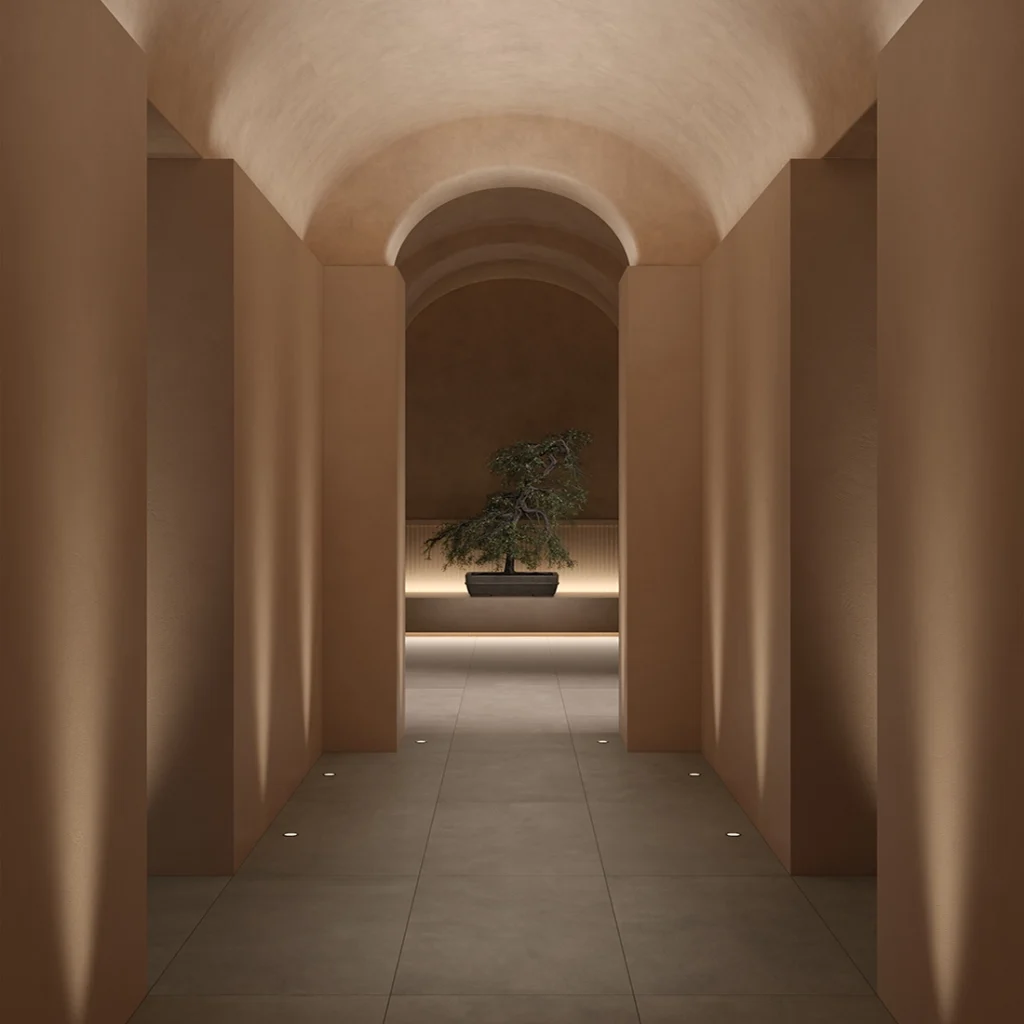
In a previous blog, we discussed the move away from cooler greys towards warmer, more natural colours, and the same principle can be seen in tile drenching.
There is a definite rise in the desire for earthy colours such as terracotta, cream and soft green. These colours are often perceived as more natural and calming, which fits particularly well with the growing emphasis on creating comfortable, relaxing spaces at home.
Common Tile Drenching mistakes to avoid
Although tile drenching can be extremely effective, there are some things to think carefully about before committing to the look.
Avoid:
- Using highly polished finishes everywhere
- Choosing heavily veined marble-effect tiles in very small rooms
- Ignoring the effect of natural and artificial lighting
- Overusing dark colours in low-light spaces
- Choosing a poorly matched grout colour
- Forgetting about slip resistance when selecting floor tiles
It’s also worth considering how the room will look at different times of day. A tile that looks warm and inviting in natural daylight can appear very different under artificial lighting.
This is where talking to a tile expert can be invaluable.
We have years of experience helping customers choose tiles for different spaces/rooms and understand how factors such as format, finish, colour, lighting and practical requirements can affect the final result.
If you’re considering tile drenching for your own home, come and see us in Chiswick, W3 8DJ, or give our team a call on 020 8993 5545.
How can you soften a Tile-Drenched room?
If you are using tiles across many surfaces, there are several ways to stop the room feeling too clinical, cold or one-dimensional.
Consider:
- Introducing natural wood through cupboards or furniture
- Layering textiles such as towels, rugs and curtains
- Using contrasting or complementary metals
- Adding indirect or ambient lighting
- Mixing matt and satin finishes
- Introducing plants and natural materials
- Using furniture and accessories to add carefully considered colour
The idea isn’t necessarily to break up the tile but to balance it with softer and warmer materials.
Is Tile Drenching just a passing trend?
While tile drenching is undoubtedly a current interior design trend, the principle behind it is unlikely to disappear completely.
The wider move towards architectural surfaces, natural-looking materials, warm colours, textured finishes and indoor-outdoor living all lend themselves naturally to using tiles across multiple surfaces.
The advantage of choosing a high-quality porcelain tile is that it can provide a durable and long-lasting finish rather than something that needs to be replaced every time interior fashions change.
Ultimately, tile drenching is less about following a trend for the sake of it and more about creating a sophisticated interior that works for your home.
Frequently Asked Questions About Tile Drenching
What is tile drenching?
Tile drenching is the use of the same tile, or complementary tiles, across multiple surfaces within a room. This can include walls, floors, splashbacks, niches, furniture and other architectural features.
Is tile drenching suitable for small bathrooms?
Yes. Using the same tile across walls and floors can reduce visual interruptions and create a more seamless appearance. Large-format tiles can be particularly effective because they also reduce the number of grout lines.
Can you use the same tile on walls and floors?
Yes, provided the tile is suitable for the intended use. Always check the manufacturer’s technical specifications, particularly for floor use and slip resistance.
What are the best tiles for tile drenching?
Large-format porcelain, marble-effect porcelain, travertine-effect porcelain and other stone-effect tiles can work particularly well. Textured tiles can also be used where you want to introduce additional depth.
Can tile drenching be used in a kitchen?
Absolutely. Kitchens are one of the most effective places to use tile drenching, with opportunities to continue the same material from floors to splashbacks, islands and worktops.
Does tile drenching make a room look bigger?
It can. A consistent tile across several surfaces can reduce visual breaks and create a more continuous appearance. Large-format tiles can enhance this effect by reducing grout lines.
What grout colour should I use for tile drenching?
A grout colour that closely complements the tile will generally create the most seamless effect. However, the right choice depends on the tile, room and desired look.
Can you use tile drenching outdoors?
Yes. Using the same or complementary tile inside and outside can create visual continuity and help connect an indoor living space with a garden or terrace. The tile must, of course, be specifically suitable for outdoor use.
Explore Our Large-Format Porcelain Tiles
If you’re considering tile drenching for your next project, take a look at our slab and large-format porcelain tile range.
Choosing the right tile is the starting point, and our experienced team can help you find a colour, format and finish that works for your space.
Visit us in Chiswick, W3 8DJ, or speak to our team on 020 8993 5545.